Featured

Health and Safety Signs

                                              Health and Safety Signs
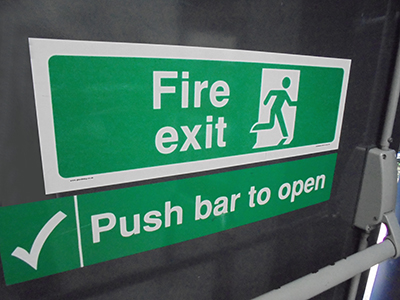
Think of a day when you reached your office and you realized that your organization is at risk to hazards associated to your workplace and many lives are endangered. What would you do? Of course you won’t sit back and relax. You will take immediate actions. Safety signs will do that job.

What are safety signs?

Safety signs are signboards, colors or illuminated signs that provide information about safety and health measures.

Why do you need safety signs? :

Safety signs are essential at workplaces, public places, in schools, colleges and universities so that people on the respective areas must be conscious to health and safety threats.

Let’s have a look at some of the common safety signs you must be aware of:

Danger Sign:

Life-threatening hazards are indicated by danger signs. They are used to alert people.

Prohibition Sign:

When you want only your staff to come in your office you can use this sign. Prohibition sign restricts someone from doing something.

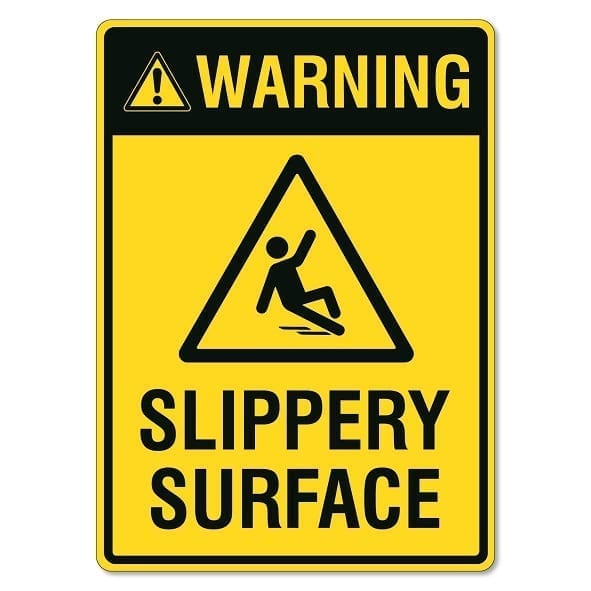
Warning Sign:

These signs inform people when the hazard is still there but it’s not life threatening. For example; an electric box containing high voltage.
Mandatory Sign:

Mandatory signs are must-to-do signs. When you are in a lab or in an industry, you must want your workers or students to wear overalls, eye protectors or foot wearers etc.

Fire Sign:

Sudden fire in your office will create a mess and may become unmangeable and uncontrollable. In such circumstances, your employees need to be aware of where fire equipments like fire extinguisher, fire blankets, and fire hoses are present. Fire signs are used in this case to indicate fire equipments and thus save life.

Health and safety signs clearly displayed in suitable environment can be easily undersood and thus can save many lifes.

Refrences:

The Health and Safety (Safety Signs and Signals) Regulations 1996, Health and Safety Executive, UK.

Occupational Safety and Health Administration, United States Department of Labor.

American National Standards Institute (ANSI) Compliant Safety Signs.

Introduce Yourself (Example Post)

This is an example post, originally published as part of Blogging University. Enroll in one of our ten programs, and start your blog right.

You’re going to publish a post today. Don’t worry about how your blog looks. Don’t worry if you haven’t given it a name yet, or you’re feeling overwhelmed. Just click the “New Post” button, and tell us why you’re here.

Why do this?

  • Because it gives new readers context. What are you about? Why should they read your blog?
  • Because it will help you focus you own ideas about your blog and what you’d like to do with it.

The post can be short or long, a personal intro to your life or a bloggy mission statement, a manifesto for the future or a simple outline of your the types of things you hope to publish.

To help you get started, here are a few questions:

  • Why are you blogging publicly, rather than keeping a personal journal?
  • What topics do you think you’ll write about?
  • Who would you love to connect with via your blog?
  • If you blog successfully throughout the next year, what would you hope to have accomplished?

You’re not locked into any of this; one of the wonderful things about blogs is how they constantly evolve as we learn, grow, and interact with one another — but it’s good to know where and why you started, and articulating your goals may just give you a few other post ideas.

Can’t think how to get started? Just write the first thing that pops into your head. Anne Lamott, author of a book on writing we love, says that you need to give yourself permission to write a “crappy first draft”. Anne makes a great point — just start writing, and worry about editing it later.

When you’re ready to publish, give your post three to five tags that describe your blog’s focus — writing, photography, fiction, parenting, food, cars, movies, sports, whatever. These tags will help others who care about your topics find you in the Reader. Make sure one of the tags is “zerotohero,” so other new bloggers can find you, too.

Design a site like this with WordPress.com
Get started